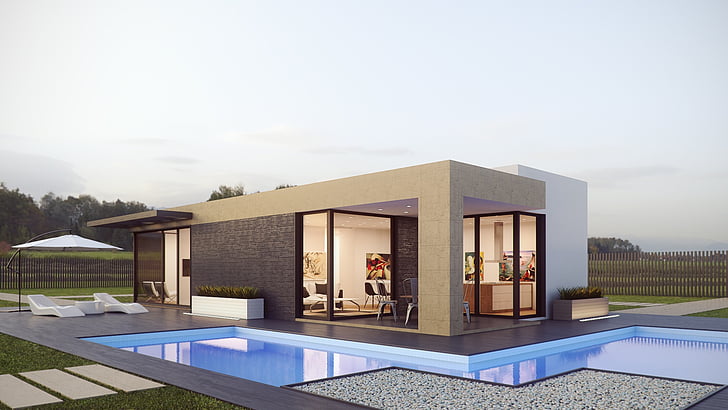

The construction industry is no stranger to innovation. Over the years, advancements in technology have continually transformed the way we design, plan, and execute construction projects. One such innovation that has revolutionized the industry is 3D architectural rendering. In this article, we’ll explore the profound impact of 3D rendering on construction and how it is shaping the future of the industry.
From Blueprints to Immersive Visualizations
Traditionally, construction projects relied on 2D blueprints, drawings, and sketches as the primary means of conveying design intent. While these flat representations provided essential information, they often left room for misinterpretation and made it challenging for stakeholders to visualize the final product accurately.
Enter 3D architectural rendering, a technology that has bridged the gap between abstract 2D plans and the three-dimensional reality of a construction project. 3D Rendering Company allows architects, engineers, contractors, and clients to see a project come to life in vivid detail before a single brick is laid. Here’s how it is transforming construction:
1. Enhanced Design Clarity
3D rendering provides unparalleled design clarity. Complex architectural elements, spatial layouts, and intricate details can be visualized in a way that is easily understood by all stakeholders. This level of clarity reduces the likelihood of design errors and misunderstandings, streamlining the entire construction process.
2. Realistic Visualizations
3D rendering offers the ability to create highly realistic visualizations. From photorealistic textures and lighting to lifelike shadows and reflections, these renderings provide an accurate representation of how a completed project will look and feel. This realism allows for more informed decision-making during the design and planning phases.
3. Design Iterations
Design iterations are an inherent part of the construction process. 3D rendering facilitates swift and cost-effective design changes. Architects and designers can experiment with different materials, colors, and layouts in a virtual environment, ensuring that the final design aligns precisely with the client’s vision.
4. Improved Communication
Effective communication is vital in construction, where multiple parties collaborate to bring a project to fruition. 3D rendering serves as a universal language that transcends technical jargon and fosters collaboration. It enables architects, engineers, contractors, and clients to discuss project details with clarity and precision.
5. Streamlined Approvals
Gaining approvals from regulatory authorities and clients is a critical phase in any construction project. 3D renderings simplify this process by providing a comprehensive and visually appealing package that helps stakeholders understand and approve the project more quickly.
6. Cost and Time Savings
Reducing errors and design changes early in the construction process translates into significant cost and time savings. With 3D rendering, potential issues can be identified and addressed in the design phase, minimizing costly modifications during construction.
7. Stakeholder Confidence
Clients and investors often require a high degree of confidence before committing to a construction project. 3D renderings instill trust by allowing them to see precisely what they are investing in. These visuals build confidence in the project’s viability and potential return on investment.
8. Project Marketing
Beyond the construction phase, 3D renderings play a crucial role in marketing projects to potential buyers or tenants. These visualizations create compelling marketing materials that showcase the project’s features and aesthetics, making it more appealing to potential stakeholders.
Conclusion
3D architectural rendering has fundamentally transformed the construction industry. It has evolved from a supplemental tool to a cornerstone of modern construction projects. The benefits of enhanced design clarity, realistic visualizations, design iterations, improved communication, streamlined approvals, cost and time savings, stakeholder confidence, and project marketing have solidified 3D rendering’s role in shaping the future of construction.
As technology continues to advance, we can expect even more exciting developments in the world of 3D rendering. Virtual reality (VR) and augmented reality (AR) applications are on the horizon, promising to take construction visualization to new heights. These technologies will further enhance collaboration, decision-making, and project outcomes.
In conclusion, 3D architectural rendering is not just a tool; it’s a catalyst for change in construction. It enables us to build the future with greater precision, efficiency, and confidence, ultimately resulting in better-designed and executed projects that benefit all stakeholders involved in the construction process.